History
The Eton Volunteer Corps was originally founded in 1860 as a response to a national call to arms to form volunteer companies to defend the country against a perceived threat from the French. We have enjoyed a proud tradition of volunteering and service ever since.
Renamed the Eton College Combined Cadet Force (CCF) in the 1960s, the CCF continues to this day with both Army and a Royal Air Force sections.
The CCF Today
Today the CCF is entirely voluntary and is offered to boys in D, C and B Blocks (Years 11-13). Training is run as far as possible by the boys themselves. Most instruction is delivered by boys from C and B Blocks (Years 12-13).
Activities and Training
For a cadet, D Block (Year 11) is all about mastering new skills and forming team bonds. In C Block (Year 12) the cadets are trained in how to teach what they have learned and begin developing their leadership skills. B Block (Year 13) cadets draw on all their experience to lead, plan and deliver training. We have three Army platoons and one RAF flight. There is healthy competition between these units.
Our Army cadets follow The Army Proficiency Certificate (APC) syllabus, which gets increasingly challenging as progression is made. APC training is designed to be practical rather than classroom-based and we aim to make training interesting, imaginative, purposeful and competitive. Lessons include Fieldcraft, Drill, Weapon Handling, Field Guns, Communication Radios, First Aid, Military Knowledge and much more.
The RAF cadets follow a bespoke programme following the RAF Syllabus. The syllabus includes some of the Army programme e.g. Drill, First Aid and Fieldcraft. We are fortunate to have a new flight-simulator room with four simulators. We also use drones and VR sets to enhance the cadet experience. Other activities include visits to firing ranges and military barracks. Senior RAF cadets have the opportunity to attend an Air Experience Flight at RAF Benson during the year.
Eton has an almost limitless ability to provide opportunities across an immense spectrum, creating lasting memories and friendships while achieving personal growth.
Kelvin, Sergeant in the CCF
CCF takes place once a week on Monday afternoons throughout the academic year. The Cadets participate in three Scheme Weekends (Military Training Weekends) during the year. These off-site camps are used to practise the military skills that cadets have learnt during the term.
Adventurous Training
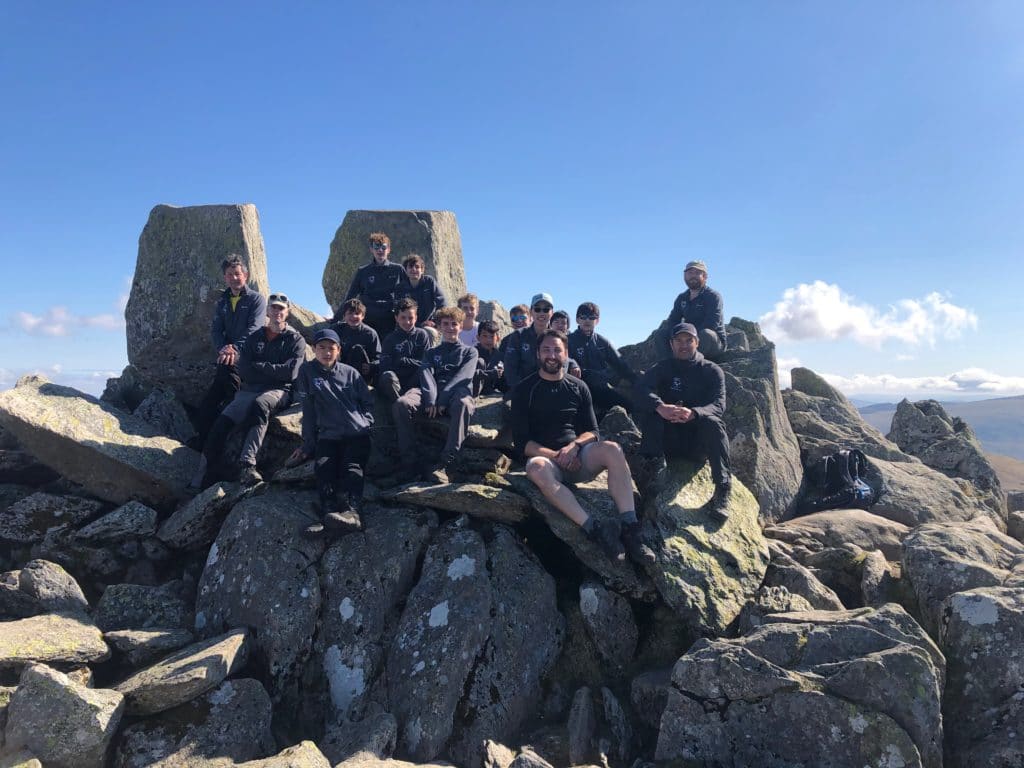
Adventure Training and CCF Annual Summer camp are also available for cadets. Activities on camp usually include a military exercise phase, range days, paintballing, assault courses, field craft lessons and adventure training.
Eton’s CCF is the first continuous school corps of its kind.
The Training Team
The CCF Contingent is staffed by a dedicated team of teaching staff, support staff and volunteers from outside the School who have been commissioned into the Cadet Force or act as non-uniformed volunteers. We are fortunate and extremely grateful for the excellent support from the London District CCF training team and the RAF CCF training team.
The Eton College CCF Tattoo
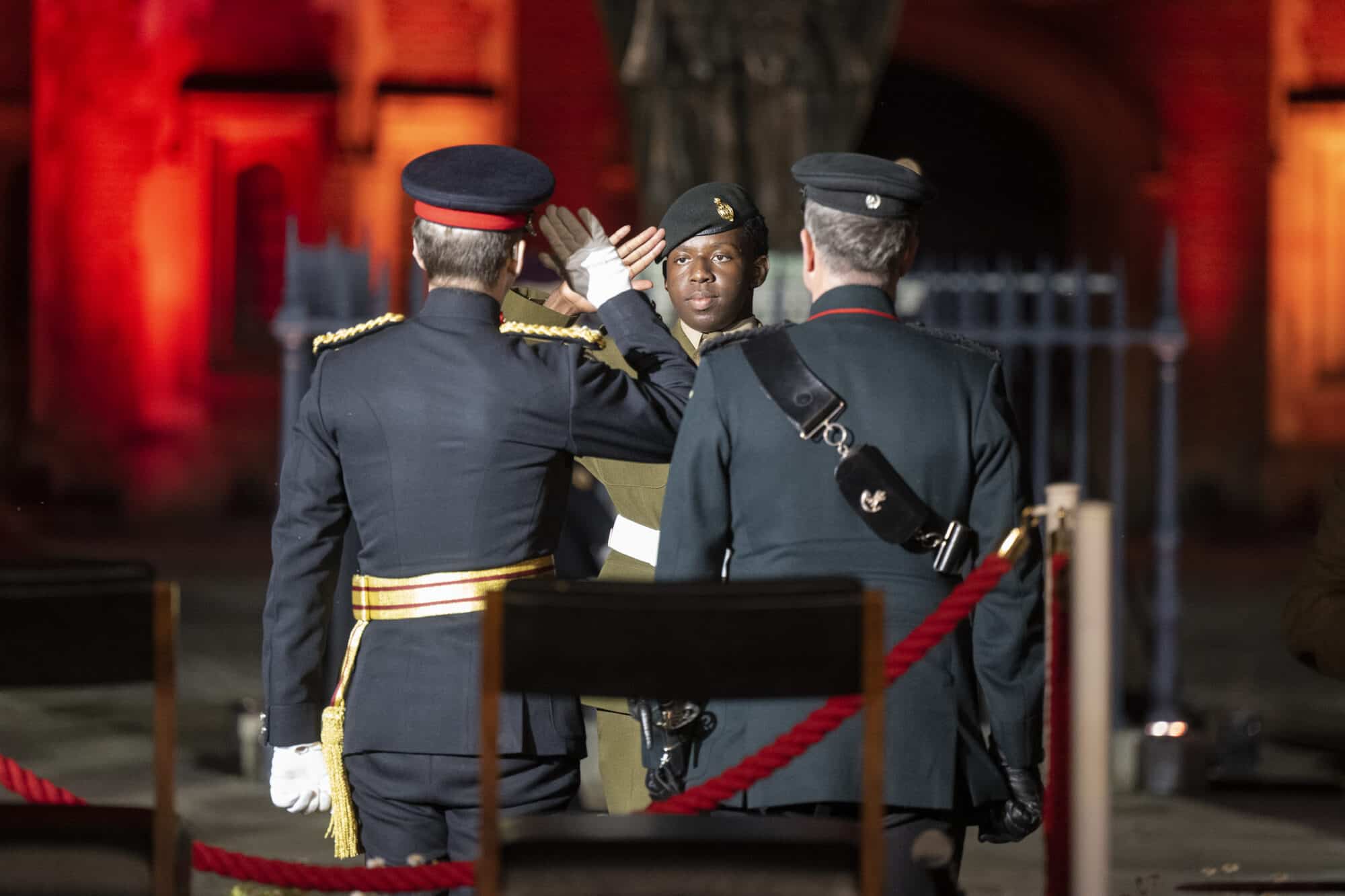
For the past few years, on the eve of the Fourth of June, we have held a Tattoo in the format of a formal military parade. The Tattoo celebrates the cadets who have volunteered to be a part of the CCF and the opportunity to say farewell to the B Block (Year 13) cadets. In addition to drill, the cadets perform a section attack and field gun display for the 500 strong audience and inspecting officer. The Honourable Artillery Company Sword of Honour is awarded to the leading cadet. The School Band and the Pipe Band have provided outstanding music for the evening.
I thoroughly enjoy the CCF and look forward to it every week and I particularly love the Schemes. You gain really valuable skills and have a lot of fun both on your own and with others in three years in the CCF.
Henry, cadet in the ARMY SECTION
Careers in the Armed Forces
The CCF is not about recruiting for the Armed Forces. Eton does, however, have a proud history of producing officers for all three of our Armed Forces and continues to do so. The CCF and its staff are well-placed to advise on careers in the military and work closely with the Eton careers team and Army Liaison Officers to support students both in the CCF and outside through their applications. We also have strong links to the Old Etonian Military network, who often support various events such as our Military Network evening.
Over the years numerous boys have won scholarships and bursaries into various regiments and we continue to support all those with an interest.