Facilities
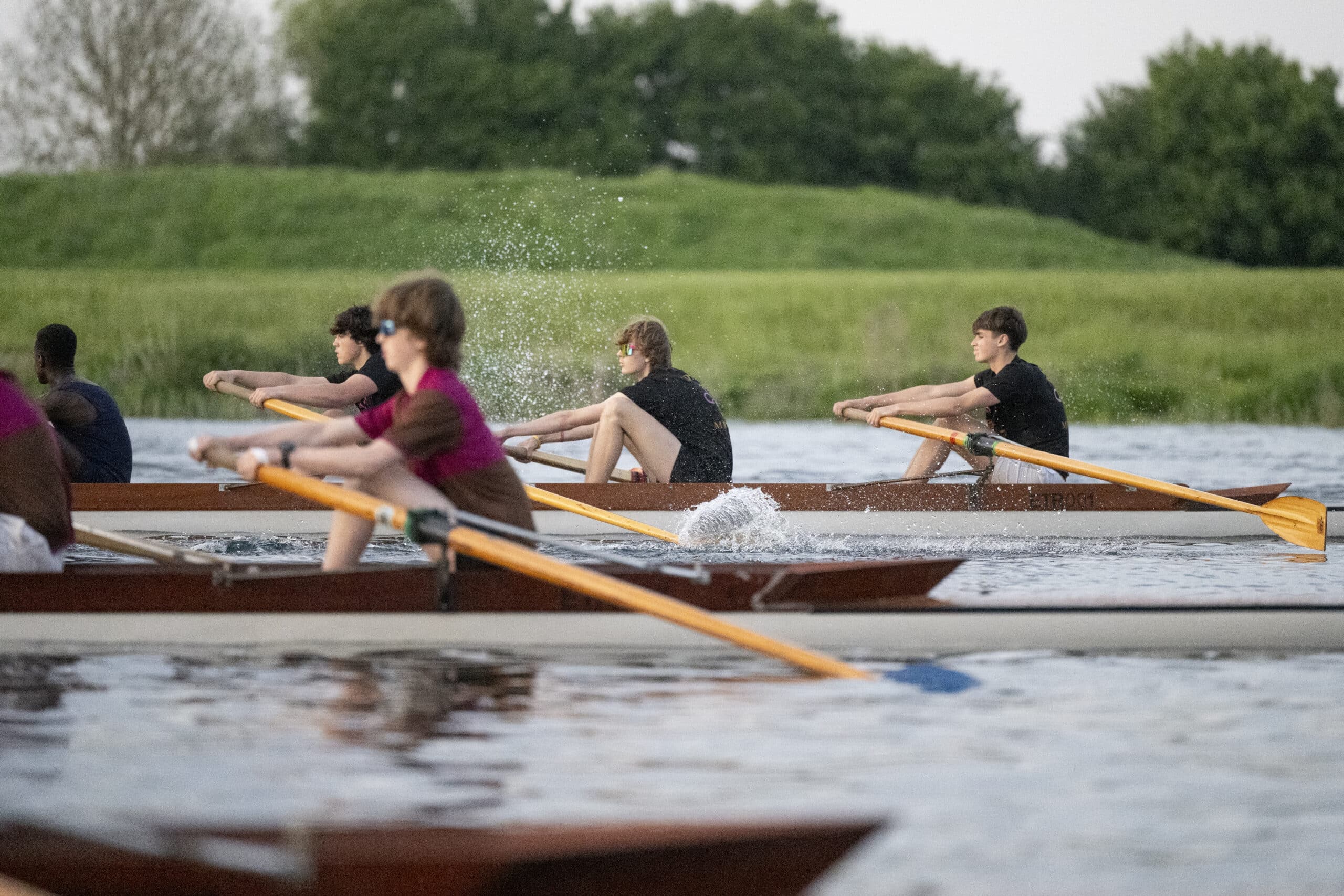
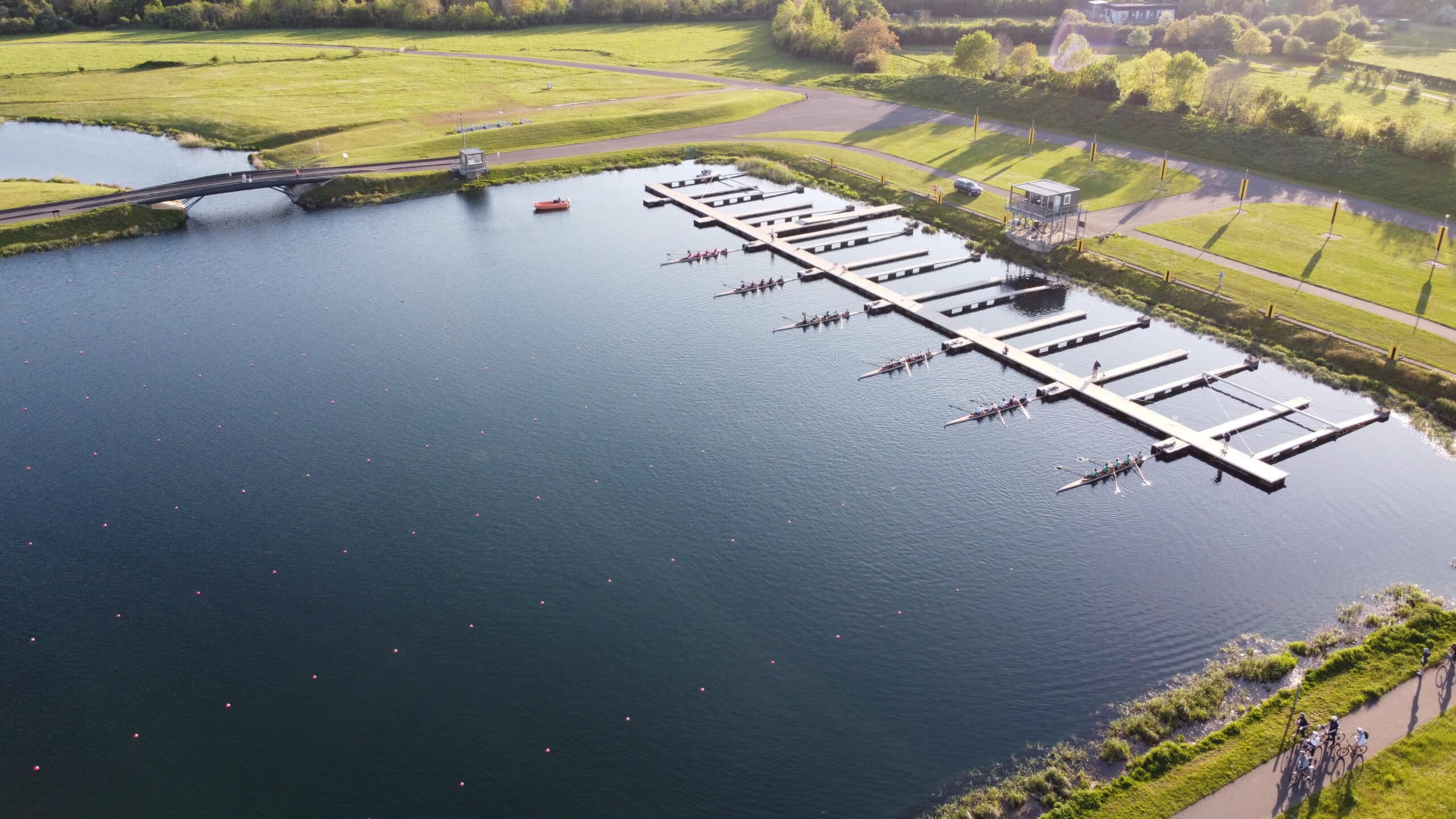
Dorney Rowing Lake, open since 2006, is the centre of rowing at Eton. We also have a land training facility (the Eton College Boat Club High Performance Centre) by the main boathouse which also has access to the river Thames. The lake is open for use by the entire British rowing community but there are times when ECBC has exclusive access. Many national events take place there including the National Schools’ Regatta in May each year.
Rafts Boathouse is in central Windsor by the bridge. This is used extensively in the Summer Half for F Block rowing as well as being the base for House rowing events such as the Bumping Races.
Masters’ boathouse is downstream of Windsor is currently used for land training, rowing in the summer and housing the boats for the Procession of Boats.
The friendships you make are so strong because you spend so much time together.
ANDREW M, COX
The Structure of Eton Rowing
Around half of F Block choose to row in Summer, after playing other sports in Michaelmas and Lent. The programme – First Summer Sculling – focuses on teaching them to scull, with an emphasis on enjoyment and technical improvement. There are internal competitions for boys in single, coxed double and coxed quadruple sculls.
In E Block (Junior Colts), boys can row alongside playing a mix of other sports in the Lent Half and can become full time rowers in the Summer. They are introduced to eight oared rowing, begin to compete against other schools, and the top three crews row at the National Schools’ Regatta.
D Block (Colts) boys can play rugby or football in the Michaelmas Half and become full time rowers from January onwards. Significant physical and technical improvement occurs in D Block and the three Colts crews usually compete with the top schoolboy crews.
During C & B Block (Upper Boats), boys can row full time for their two years as Specialists and still have time to engage in other spheres of Eton life such as music and drama. Eton College usually fields three senior crews at the National Schools’ Regatta and the VIII competes in the Princess Elizabeth Challenge Cup at Henley Royal Regatta, the event for junior mens’ eights. To date Eton has won the Princess Elizabeth Cup and the Ladies Plate over forty times.
Bumping Races
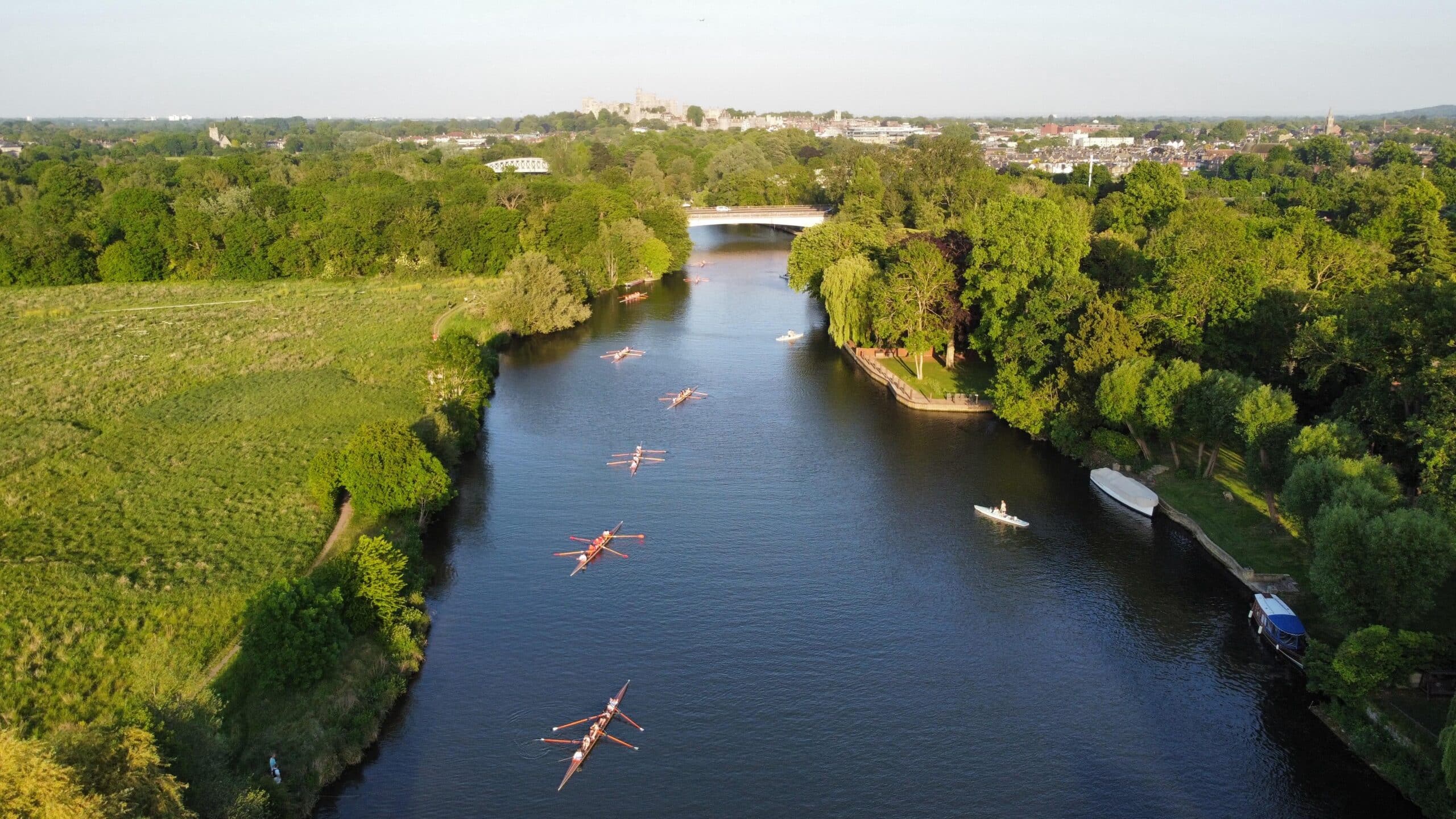
The origins of ‘bumping’ – part Medieval pageant, part oar to oar combat – can be traced back to the eighteenth century when Etonians would race along the river to Windsor Bridge.
In the late 19th century, boys would compete over four days in May in the processional VIIIs, but this format was quickly superseded by Junior House IVs in 1902. The event became so popular that by 1919 there were 56 crews competing in four divisions.
Today, our 25 Boarding Houses are split into two divisions of fiercely competitive crews that race along the Thames between Lower Hope and Rafts in hope of becoming Head of the River. Cheering their friends on from the bank, boys witness plenty of House spirit, erratic coxing and boat-stopping crabs, culminating in the Bumping Cup being awarded to the House with the most ‘bumps’.
Procession of Boats
The first recorded Procession of Boats took place in 1780, when ‘the young gentlemen scholars of Eton College’ took to the water en masse in 14 galleys and barges, ‘with flags and streamers flying’ in honour of the birthday of the Prince of Wales. This Venetian-inspired ‘regatta’ immediately became an annual event to mark the election of scholars to King’s College, Cambridge and to honour the birthday of George III on the Fourth of June.
The convention of naval uniforms was quickly adopted: with the coxes dressed as officers – Admirals, Captains and Midshipmen – and the rowers as able-seamen in striped shirts. In keeping with the nautical theme, many of the names of the boats were taken from ships in service at the time of Nelson: Victory (Nelson’s Flagship), Thetis, Defiance, Dreadnought.
On arriving at Windsor Bridge, the boats, led by the ten-oared Monarch, would be greeted by cheering crowds, firing canons and fireworks. The crews would then race around Firework’s Eyot, straining hard to make a bump on the boat ahead, before standing up and tossing their oars in naval fashion in honour of the King.
Over 240 years later, the tradition has endured and our boys process every Fourth of June.
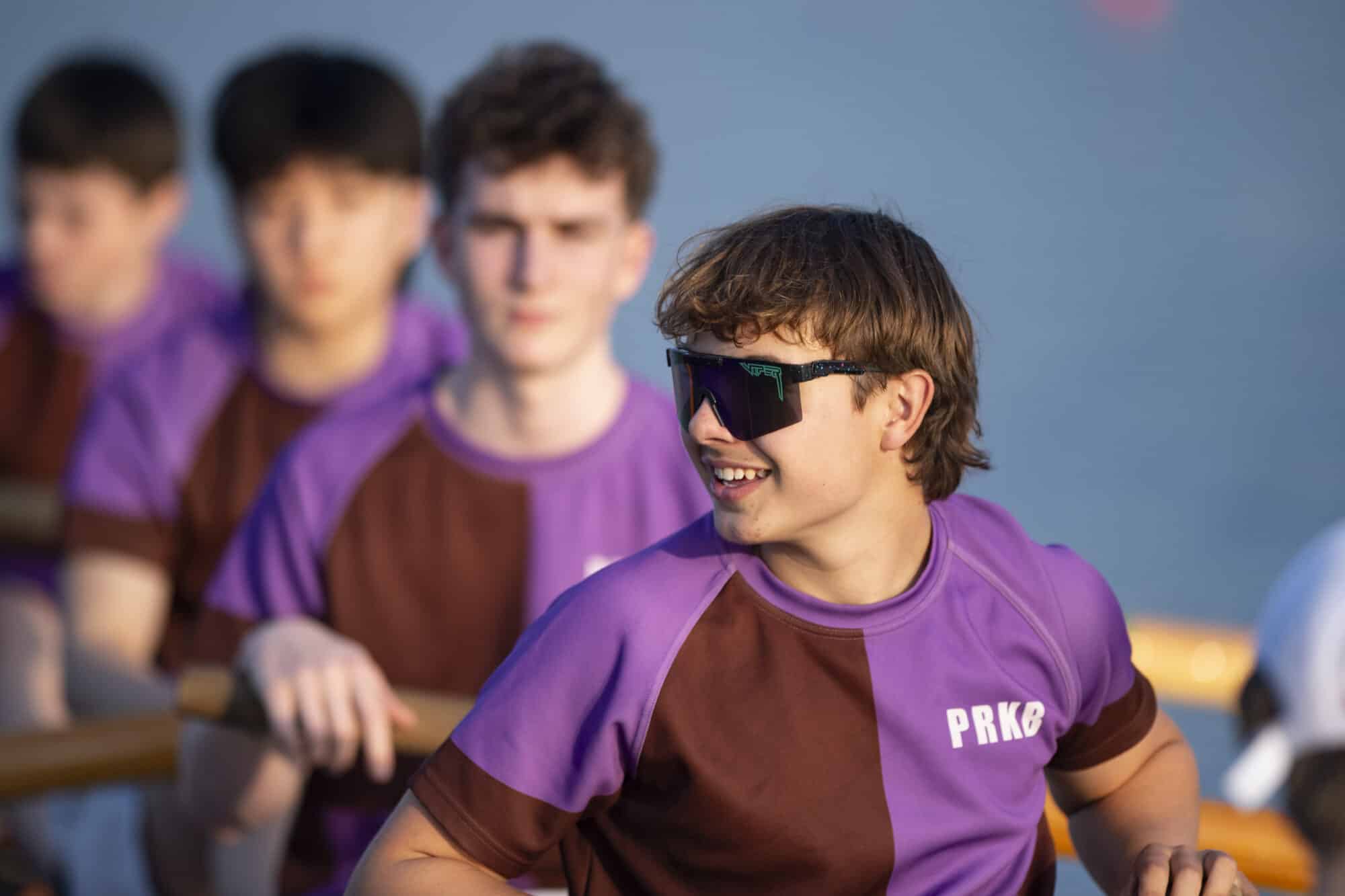
Etonians have rowed for Great Britain in the Olympic Games winning 42 medals between them – 27 Gold Medals, 13 Silver Medals & 3 Bronze Medals
Rowing Beyond Eton
Our rowers often continue their rowing careers at top university rowing programmes around the world. Recently, many Etonians have crossed the Atlantic to study at top US universities such as Harvard, Yale, Princeton, Brown, Stanford and Dartmouth.
Eton has always had a good representation in the Oxford and Cambridge University Boat race, at one point, providing 40% of all blues since the first race in 1829. In the 2026 race, two Old Etonians competed and won the Goldie (reserve) Boat Race for Cambridge.
International Representation
Eton boys can first represent Great Britain at the end of D Block in the annual GB vs France competition. Upper Boats boys put themselves forward for the GB U19 team. Since 2018, there have been four Etonian World Champions, one silver medallist and three bronze medallists at the U19 World Rowing Championships.
Many Old Etonians have continued their rowing to the highest level and achieved selection for the GB U23 and Senior teams at World Rowing Championship and Olympic Games. Since 2018, there have been twelve Old Etonian World Champions and two silver medallists at the U23 World Championships.
At the Olympic Games, recent medallists have been:
- 2021 – Fred Vystavel (Denmark), Bronze Medal – Coxless Pairs
- 2016 – Constantine Louloudis, Gold Medal – Coxless fours
- 2012 – Constantine Louloudis, Bronze Medal – Eights
- 2008 – Alastair Heathcote, Silver Medal – Eights
- 2004 – Matthew Pinsent & Ed Coode, Gold Medals – Coxless fours
- 2000 – Matthew Pinsent, Gold Medal – Coxless fours
- 1996 – Matthew Pinsent, Gold Medal – Coxless pairs
- 1992 – Matthew Pinsent, Gold Medal – Coxless pairs